

Discover the history of the Tour de France Barcelona 2026 and its historic link with Montjuïc, Joaquim Sabaté, and the origins of Inverse cycling apparel.
International cycling will once again turn its eyes toward Barcelona and the mountain of Montjuïc next July 4th and 5th. In 2026, the Tour de France will reclaim this iconic stage as part of its route through Catalonia, once again consolidating the city as a global benchmark for the sport.
But this is not a new story. It is the continuation of a legacy that dates back to the Tour de France of 1965, when Barcelona already proved its organizational capacity and its deep connection with elite cycling, thanks to people like Joaquim Sabaté, founder of the Inverse cycling clothing brand.
When Barcelona becomes the world capital of cycling
When the Tour de France returns to Barcelona in July 2026, many fans will discover the magic of a route that winds through the mountain of Montjuïc. For Inverse, however, this setting holds a much deeper meaning. It is part of our history.
To understand it, one must travel back more than sixty years, to a Barcelona that was beginning to awaken from the grayness of the post-war years and looking to sport as an open window to the world. In that context, the figure of Joaquim Sabaté i Dausà, founder of Inverse, emerged—a sports director, passionate cycling enthusiast, and one of the people who contributed the most to turning Montjuïc into an international temple of two wheels.
The 1965 Tour de France in Barcelona
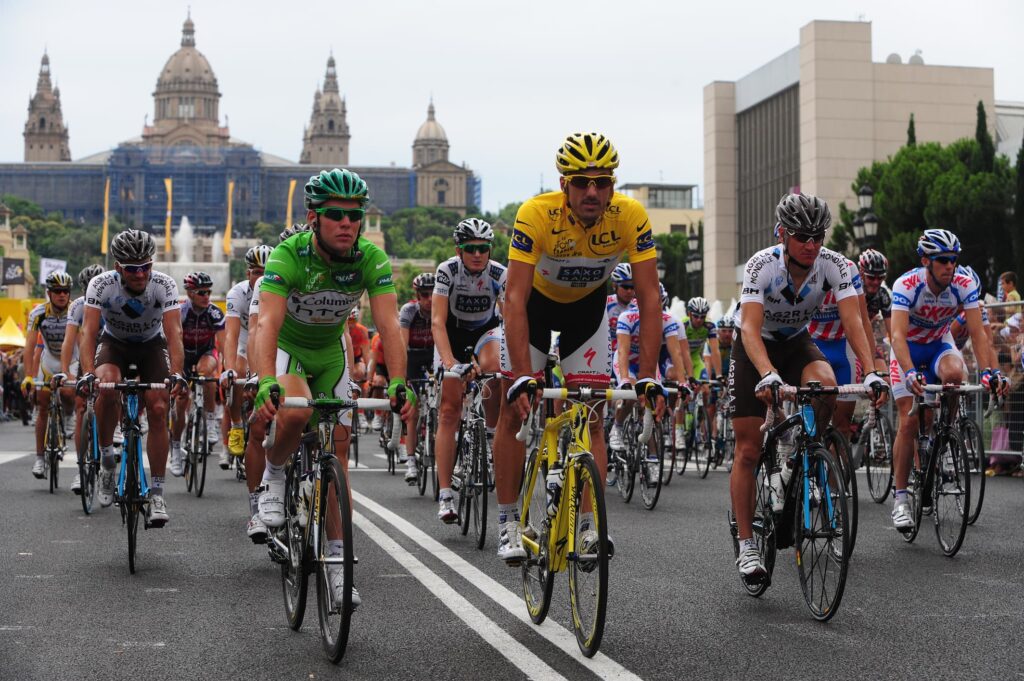
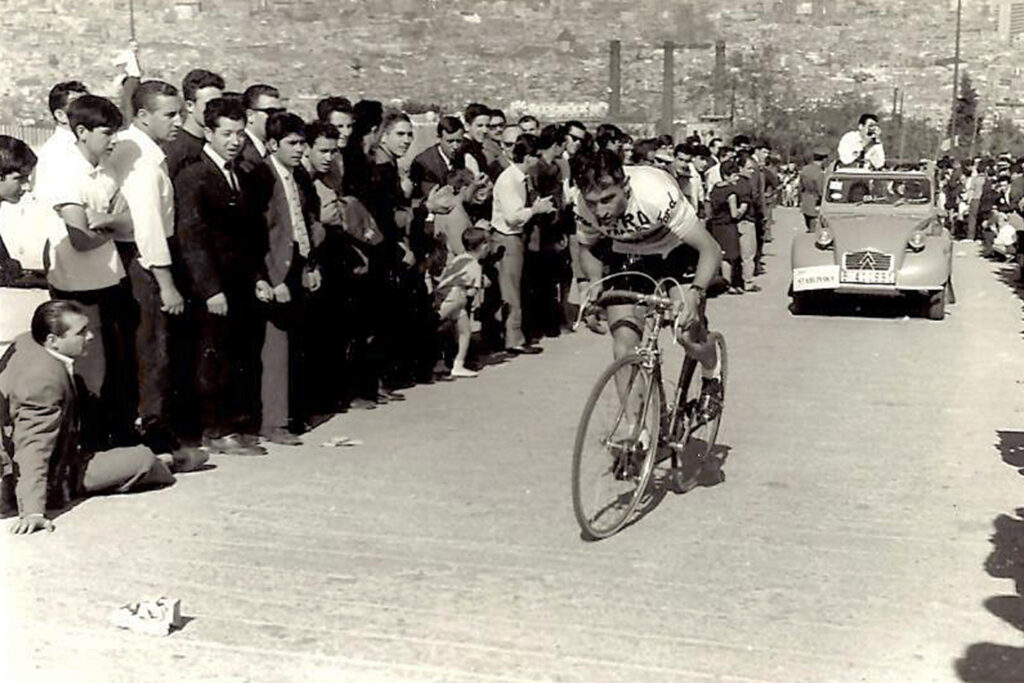
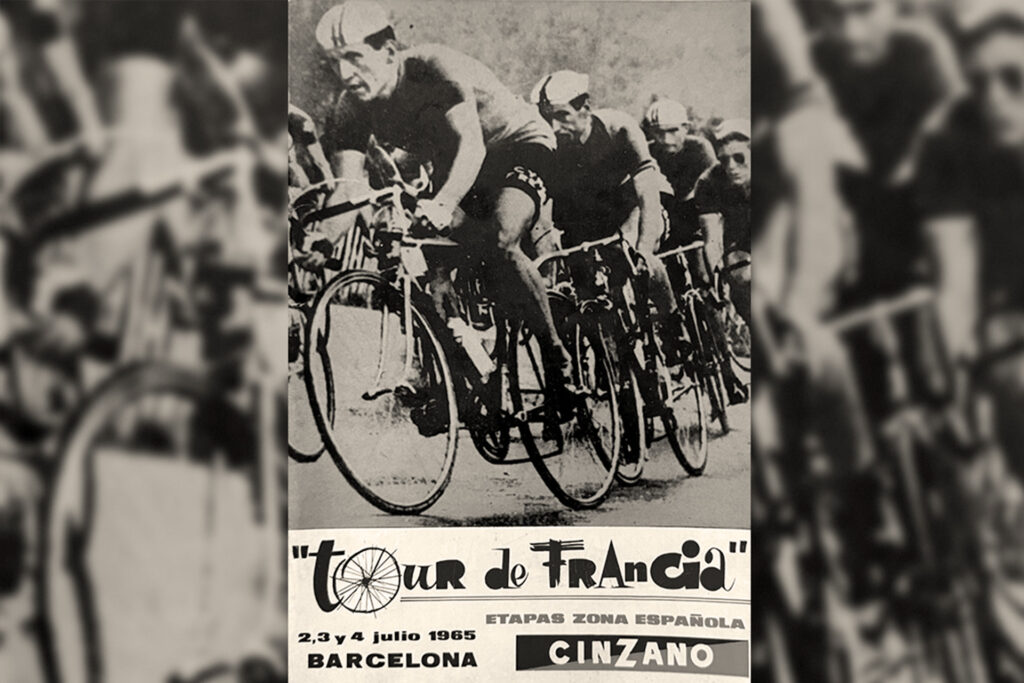
In 1965, as the Tour de France arrived in Barcelona for the second time (the first was in 1957), Joaquim Sabaté was already a key figure in Catalan cycling. As president of the Esport Ciclista Barcelona, he had revived l’Escalada Ciclista a Montjuïc that very year—a race that would become legendary and for decades would gather the best riders in the world on the bends of the Olympic mountain. That initiative helped consolidate Montjuïc as one of the great international stages of cycling.
On July 2, 1965, the Tour arrived in Barcelona from Ax-les-Thermes. The victory went to José Pérez Francés (who passed away in 2021), who culminated a long breakaway by entering Montjuïc alone in front of thousands of spectators. For a few days, the city became the center of European cycling, also hosting the race’s rest day before resuming the journey back to France.
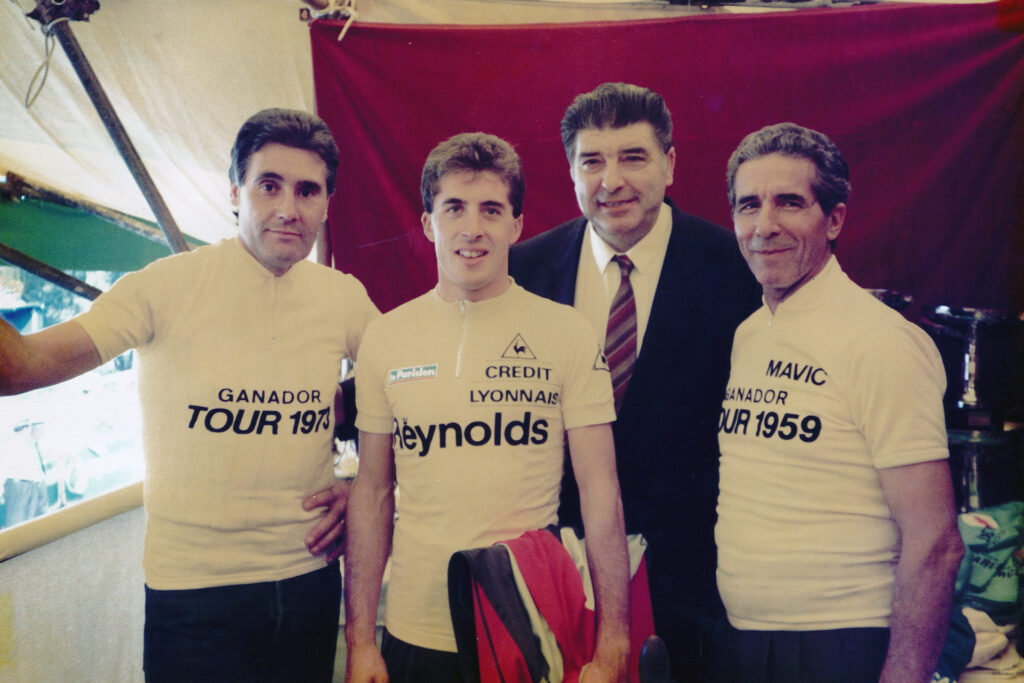
Joaquim Sabaté and the myth of the Escalada de Montjuïc that returns to the Tour de France in 2026
That relationship between Barcelona, the Tour de France, and Montjuïc was no accident. Behind it was the hard work of many people who for years had promoted cycling in the city. Among them was Joaquim Sabaté, who understood before anyone else the sporting and symbolic potential of a mountain that offered a unique stage for competition.
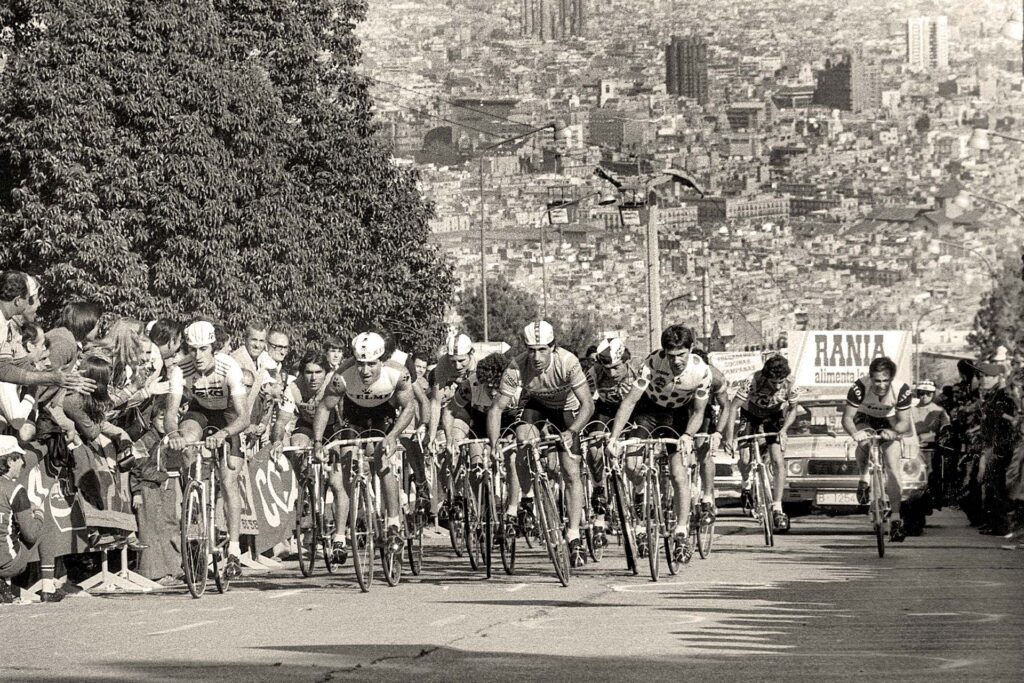
Sixty-one years later, history seems to come full circle. The Tour de France 2026 will once again make Montjuïc a protagonist. Of the three stages on Catalan soil, the finish of the first stage on Saturday, July 4th, will end on an uphill climb at the Montjuïc Olympic Stadium (with a final 800-meter stretch at a 7% gradient), while the second stage on Sunday, July 5th, will start from Rambla Nova in Tarragona, running along the Costa Daurada coastline through towns like Sitges and heading inland through demanding areas such as the coast of Begues (6.1 km at 6.5%), finally arriving in Barcelona, where the cyclists will complete an incredible closed circuit climbing the Castell de Montjuïc three times, with ramps reaching a 13% gradient. The finish line will once again be located at the Olympic Stadium.
For many fans, this will be a novelty. For Inverse, it is also an involuntary tribute to a vision that Joaquim Sabaté began to build decades ago. The routes that continue to captivate organizers, riders, and spectators today are the legacy of that way of understanding cycling: spectacular, demanding, and intimately linked to the city of Barcelona.
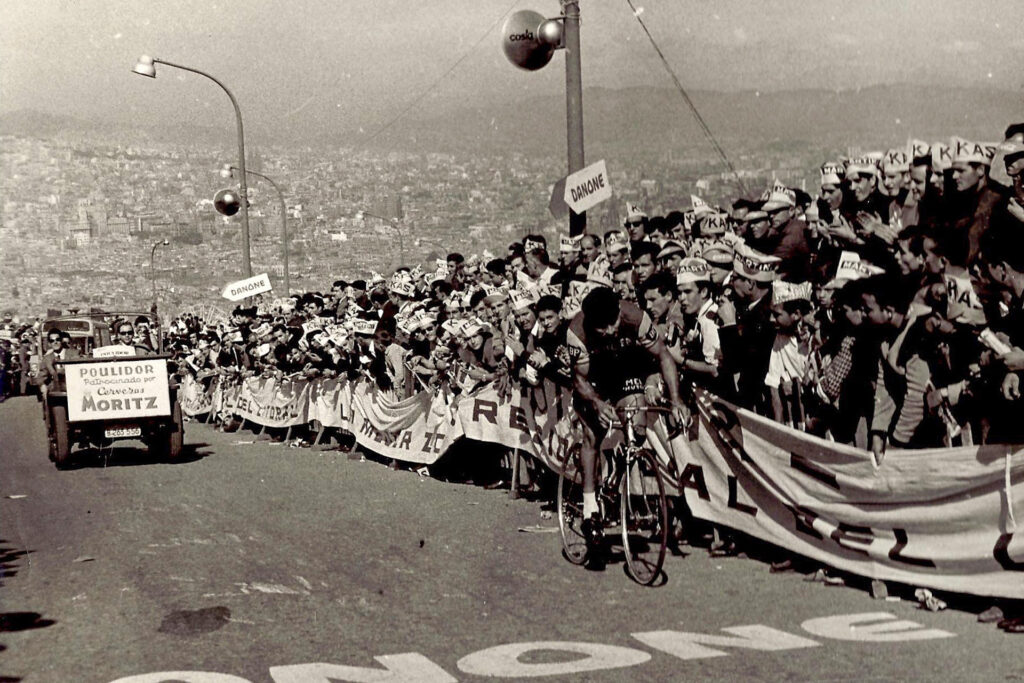
Montjuïc as a global cycling stage
It is no coincidence that the mountain that saw the birth of the Escalada a Montjuïc continues to be one of the great symbols of world cycling today. Nor is it a coincidence that the Tour de France has once again chosen this setting to write a new page in its history.
When the best cyclists in the world face the ramps of Montjuïc in 2026, they will be pedaling upon a legacy that people like Joaquim Sabaté helped to build. A legacy that is part of the history of Catalan cycling, the history of Barcelona, and also the history of Inverse. Because before Inverse was a brand, it was one man’s passion for cycling. And that passion keeps moving, always forward.